
AI Telegram Bot: GPT-4 Chat & Instant Dall-E 3 Image Generation
Instantly deploy an intelligent AI Telegram bot, automating chat responses and on-demand image generation, reducing user query handling time by over 85%.
Manual interaction and limited capabilities often hinder engaging Telegram bot experiences. This workflow establishes an intelligent Telegram AI assistant leveraging GPT-4 for dynamic conversations and seamlessly integrates Dall-E 3 for on-demand image generation, elevating user engagement and reducing operational overhead.



Documentation
Build an Advanced AI Telegram Bot with GPT-4 and Dall-E 3
This powerful n8n workflow lets you create an intelligent Telegram bot capable of engaging in dynamic conversations using OpenAI's GPT-4 and generating stunning images on demand with Dall-E 3. It's perfect for enhancing customer support, automating content creation, or simply providing a smarter interactive experience for your users.
Key Features
- Intelligent Chat with GPT-4: Provide nuanced, human-like responses to user queries using the latest GPT-4 model.
- Instant Dall-E 3 Image Generation: Users can request images directly within the chat, which are generated and sent back instantly.
- Contextual Conversation Memory: The bot remembers previous interactions, ensuring coherent and personalized dialogues.
- Formatted Telegram Responses: Messages are automatically formatted using Telegram-supported HTML, including bold, italics, code blocks, and links.
How It Works
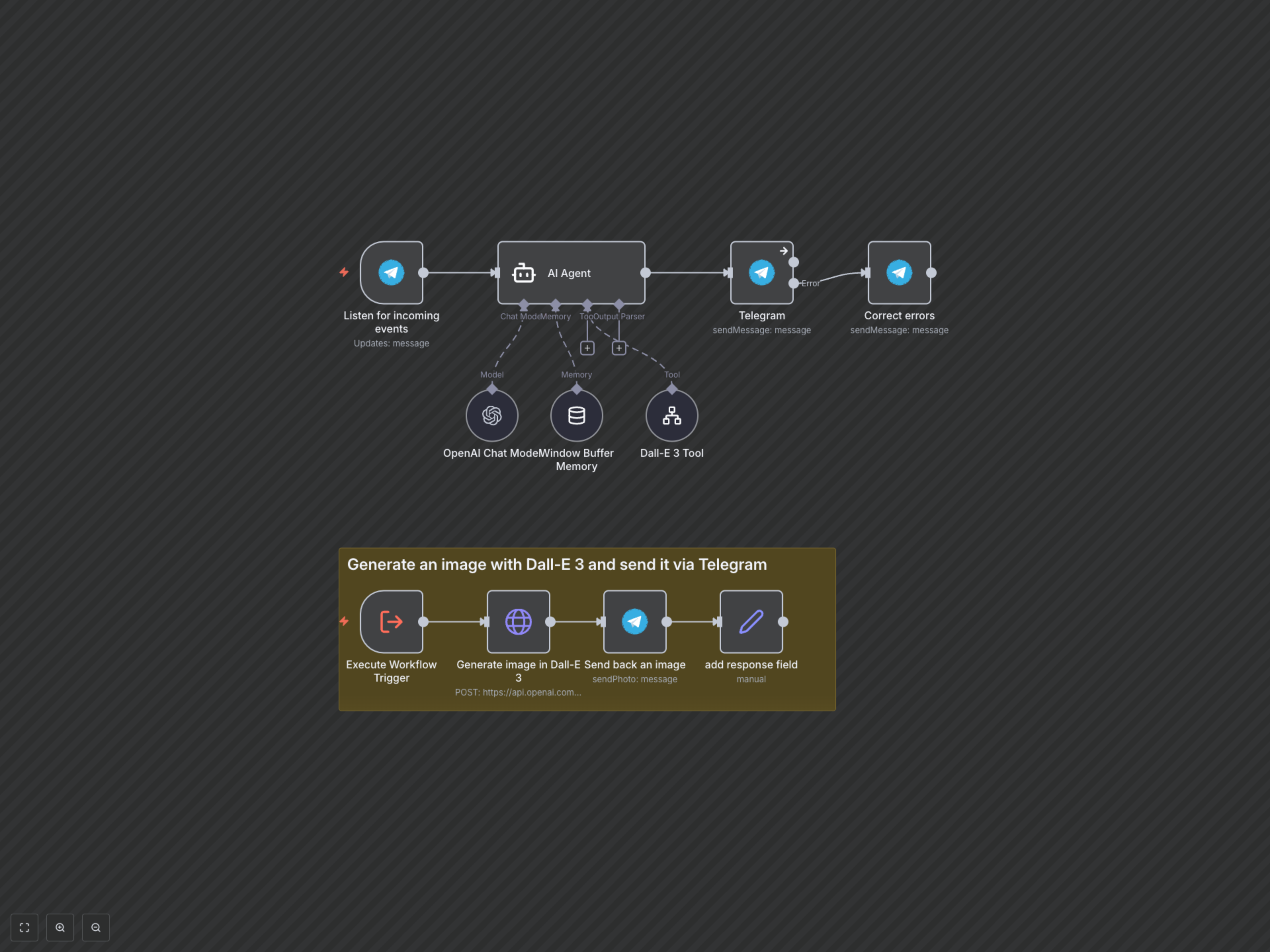
This workflow starts by listening for incoming messages on Telegram. Once a message is received, it's passed to an AI Agent powered by LangChain and the OpenAI Chat Model (GPT-4). The agent maintains conversation context using a Window Buffer Memory. If the user's request involves generating an image, the AI Agent will trigger a sub-workflow via the 'Dall-E 3 Tool'. This sub-workflow sends a request to the OpenAI Dall-E 3 API, retrieves the generated image, and sends it back to the user on Telegram. For regular chat, the agent's response is formatted into HTML and sent directly back to the user.