
Enhance Telegram Engagement with AI Chat & Image Generation
Instantly deliver AI-generated responses and images to Telegram users, reducing manual interaction time by over 80% and significantly boosting user engagement.
Manually managing Telegram interactions and providing dynamic, intelligent responses can be time-consuming and resource-intensive. This workflow instantly deploys an advanced AI chatbot that automatically handles diverse user queries, generates custom images, and provides personalized greetings directly within Telegram.


Documentation
Telegram AI Assistant with Image Generation
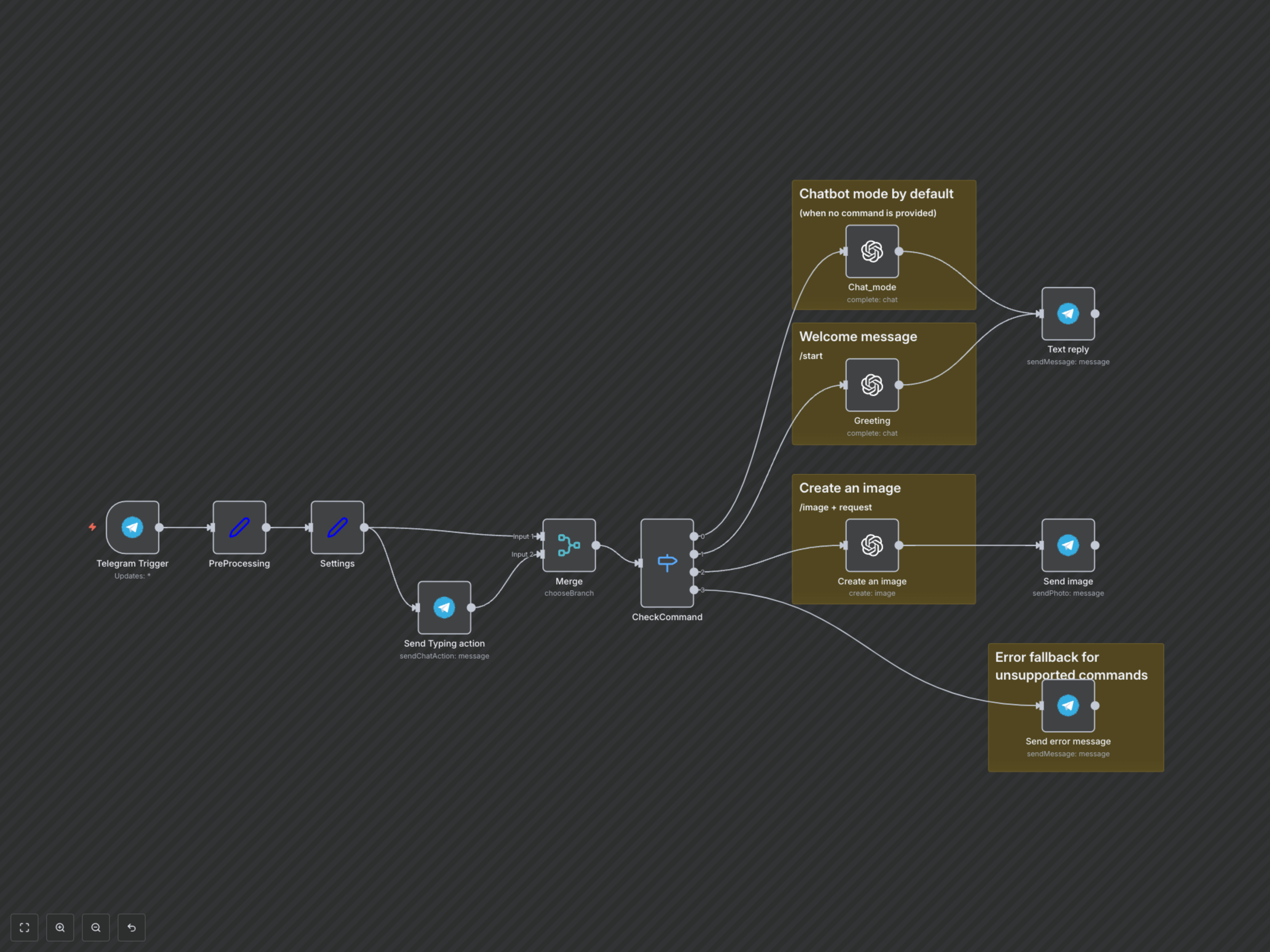
This n8n workflow empowers you to create a dynamic AI chatbot directly within Telegram. It listens for incoming messages, intelligently responds to user queries, welcomes new users, and even generates images on command, all powered by OpenAI.
Key Features
- Automated AI Chat Responses: Engage users with intelligent, context-aware replies using OpenAI's advanced language models.
- On-Demand Image Generation: Allow users to create stunning images simply by sending a /image command, expanding interactive possibilities.
- Personalized Welcome Messages: Greet new users with a warm, language-aware introduction for an enhanced first interaction.
- Dynamic Chat Actions: Improve user experience by displaying "typing" or "uploading photo" status messages in real-time.
- Intelligent Command Handling: Distinguish between general chat, specific commands (/start, /image), and provide helpful error messages for unsupported requests.
How It Works
The workflow triggers on any new message received in Telegram. It first sets global conversation parameters like bot personality and response length, then sends a "typing" or "uploading photo" action to the user. A Switch node then intelligently routes the message based on its content: General text messages are processed by an OpenAI chat model for a human-like response. The /start command triggers a personalized welcome message generated by OpenAI. The /image [prompt] command extracts the prompt and sends it to OpenAI's image generation model, then replies with the created image. Unsupported commands receive a friendly error message. Finally, the appropriate AI-generated content is sent back to the user via Telegram.