
AI-Powered Weather Forecasting: Real-time Insights for Smart Decisions
Deliver comprehensive, context-aware weather forecasts in seconds, reducing manual research time by over 90% and enhancing decision-making speed for various applications.
Manually searching for detailed weather forecasts across multiple sources for planning is inefficient and often lacks critical context. This workflow harnesses AI to instantly provide accurate, location-specific weather predictions, empowering faster and more informed decisions.


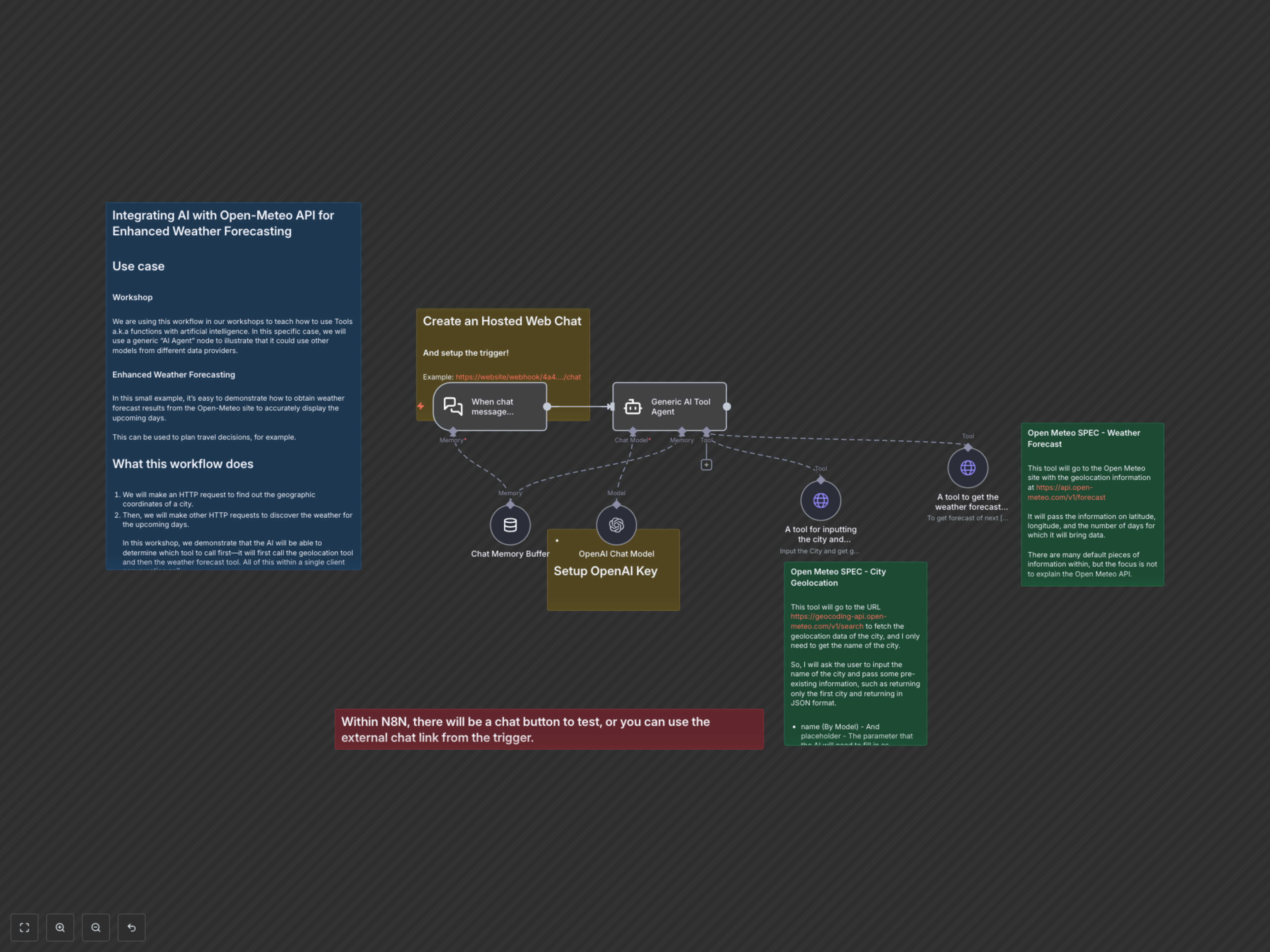

Documentation
AI-Powered Weather Forecasting with Open-Meteo
This advanced n8n workflow demonstrates the power of integrating artificial intelligence with external APIs to provide dynamic and intelligent solutions. Designed for workshops and practical applications, it showcases how an AI agent can intelligently use multiple tools to fulfill complex user requests, such as obtaining precise weather forecasts. From planning travel to making daily operational decisions, this workflow streamlines access to critical weather data.
Key Features
- Intelligent AI Assistant: Engages users through a web chat interface, understanding natural language requests for weather information.
- Smart Tool Utilization: Automatically determines the necessary steps, first retrieving city geolocation and then fetching accurate weather forecasts via the Open-Meteo API.
- Enhanced Decision Support: Provides reliable, up-to-date weather data essential for travel planning, event management, and various business operations.
- Seamless Conversation Flow: Utilizes chat memory to maintain context and deliver a natural, continuous user experience.
How It Works
This workflow begins when a user sends a chat message, such as "Weather Forecast for the Next 7 Days in São Paulo." The message is received by the AI Chat Trigger node and passed to the Generic AI Tool Agent. Utilizing the OpenAI Chat Model and a Chat Memory Buffer for context, the AI agent intelligently determines the required information. It first calls a specialized HTTP Tool to find the geographic coordinates of the specified city using the Open-Meteo Geocoding API. Once the coordinates are obtained, it then invokes a second HTTP Tool to fetch the weather forecast data from the Open-Meteo Forecast API. All of this seamless interaction happens within a single conversational turn, providing the user with an accurate and tailored weather forecast.